
Discuss indoor-air concerns
and testing options.
Concerned about the air in your home? Start with what you have noticed, then ask which indoor-air measurements or assessments may help—and what the results can actually tell you.
Airsmart will confirm the service scope and appointment availability with you.
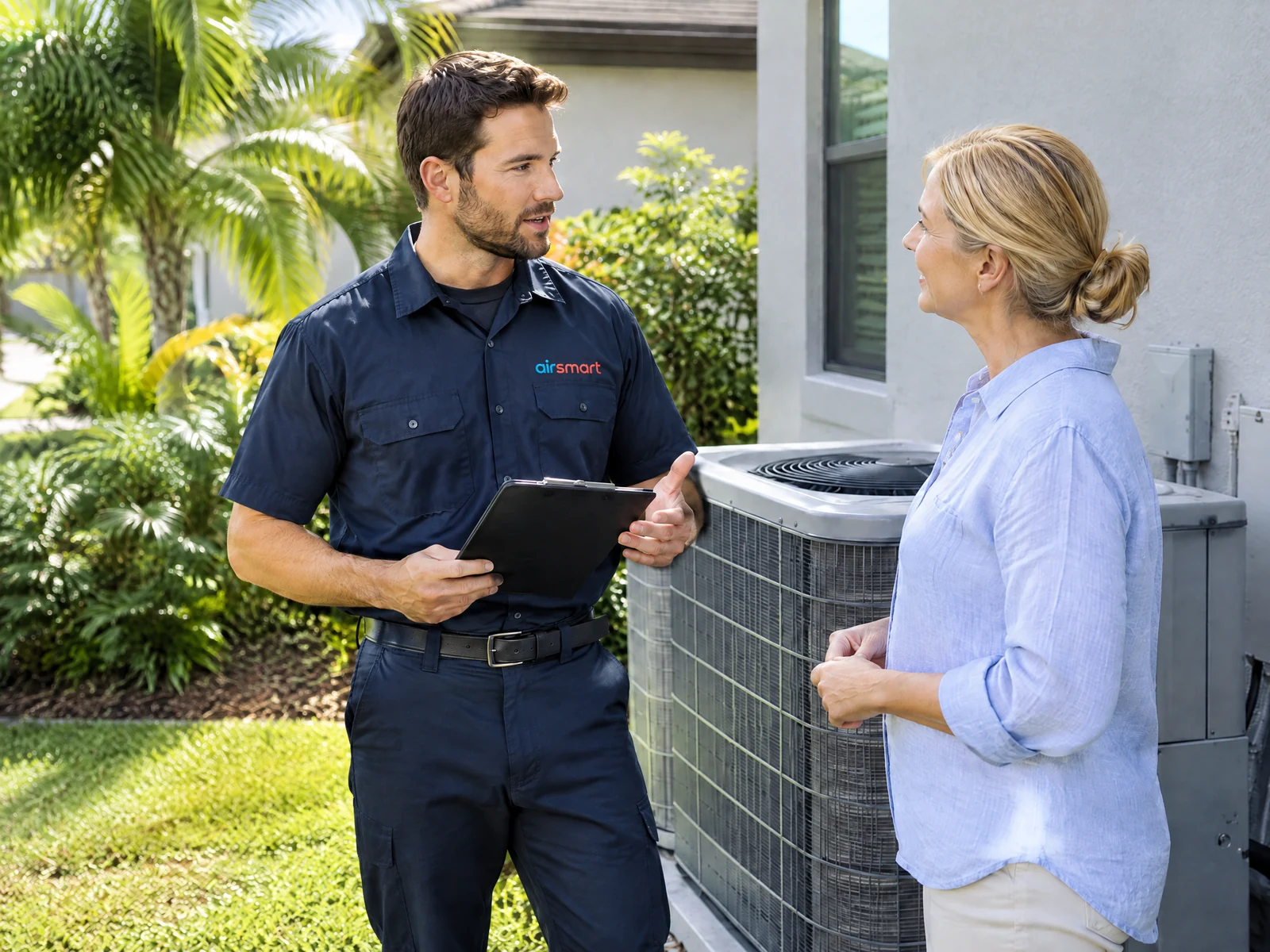
What to share when you discuss Indoor Air Quality Testing.
You have a specific concern
Describe odors, humidity, or other observations without assuming a cause or treating them as a diagnosis.
You want meaningful testing
Ask which measurements are proposed, how they relate to your concern, and what their limits are.
You need an understandable result
Clarify what report, explanation, and possible next steps are included before scheduling a test.
What the proposed HVAC service should explain.
Use these topics to guide your conversation. They are questions to confirm—not a promise that every item is included in a visit.
- The concerns you want the assessment to address
- The proposed measurements, equipment, sampling, and any laboratory involvement
- What results can establish—and what they cannot
- Price, timing, report format, interpretation, and follow-up scope
Schedule indoor air quality testing for your home.
Start with a safety check, then choose the available contact option for this service. Airsmart will confirm the scope and appointment availability with you.
Florida licenses CAC 1821484 · ES12002190
Emergency safety check
Check for an urgent HVAC or household danger.
Before we discuss symptoms or equipment, check for any of these urgent situations.
- A carbon-monoxide alarm or possible CO symptoms
- Gas odor or a suspected gas leak
- Smoke, fire, burning smell, sparks, or arcing
- Electrical shock, an active electrical hazard, or water contacting electrical equipment
- A suspected refrigerant release
- Severe indoor temperature risk involving an infant, older adult, medically vulnerable person, or serious symptoms
This answer does not mean the situation is safe. If anything changes, stop and get help.
What to expect with Indoor Air Quality Testing.
Frame the question
Note when and where you notice the concern. For urgent danger or serious symptoms, use emergency services instead of waiting for testing.
Understand the test
Ask why the proposed measurements are useful and confirm the method, limitations, and included deliverables.
Discuss the findings
Review the explanation with an appropriate professional. A test result is not a blanket safety clearance or a medical diagnosis.
The approved test panel, measurement methods, laboratory arrangements, and pricing have not been supplied. No specific contaminant test or health outcome is promised.
Common questions about this HVAC service.
Which pollutants do you test for?
The approved test panel has not been published. Contact Airsmart to confirm which measurements, sampling methods, and laboratory services—if any—are appropriate and available.
Can testing tell me whether my home is safe?
Not as a blanket assurance. Tests have limits and do not replace emergency response or medical evaluation. A carbon-monoxide alarm, gas odor, or serious symptoms require immediate appropriate action.
Will I receive a report?
Confirm the report, interpretation, turnaround, and follow-up included in the service before booking. Those deliverables are not yet specified in this preview.